About All Tours From Chiang Mai ToursPrivate ToursElephant Sanctuary ToursHiking Tours Directions Hours & Fees Guides
Find Tours 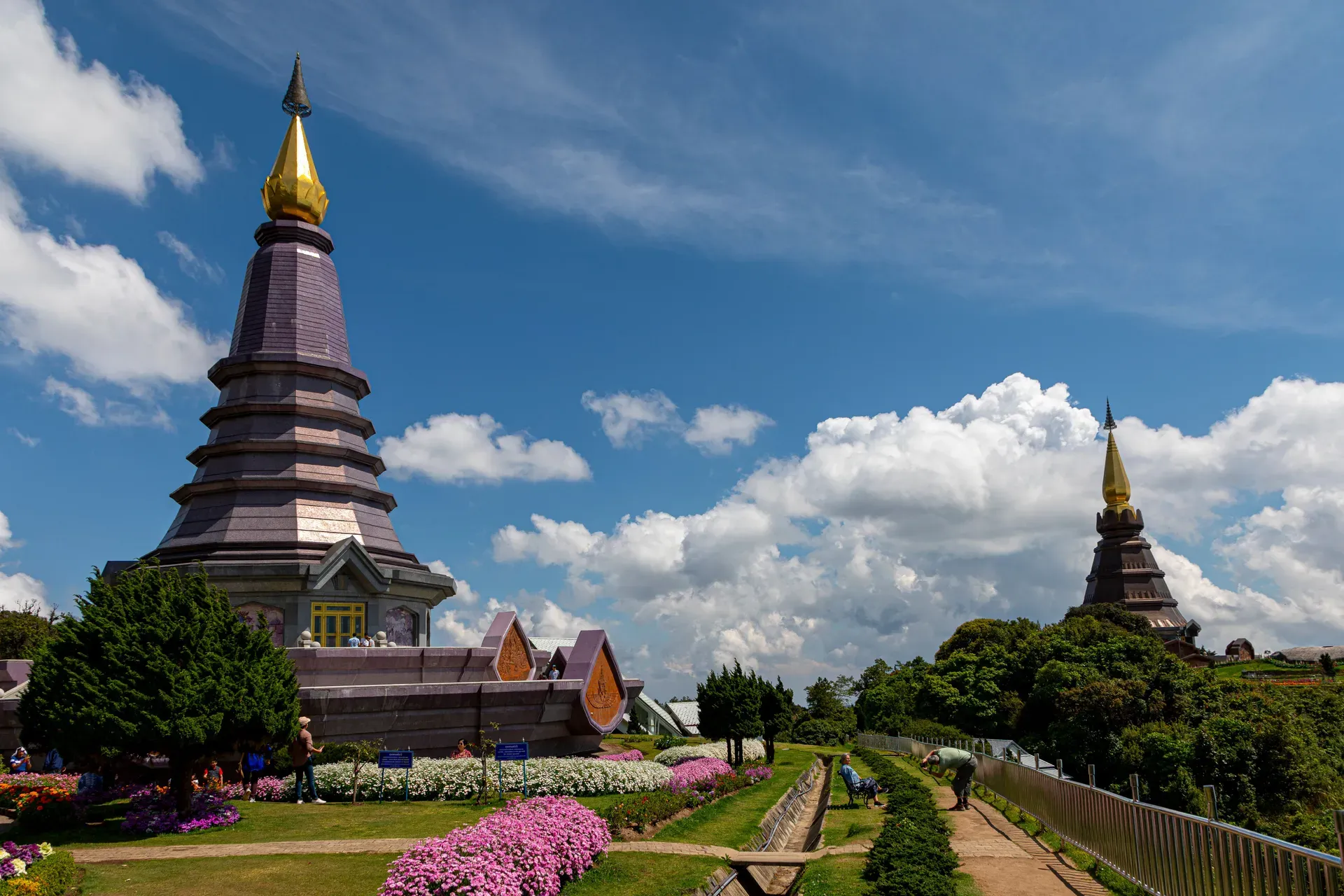
Stand at 2,565 meters above sea level to walk through Thailand's only sphagnum bog cloud forest. The drive up passes crashing waterfalls, terraced rice fields, and the manicured gardens of the Royal Twin Pagodas.
Find Guided ToursLocated in the Chom Thong District of Chiang Mai Province, Doi Inthanon National Park covers 482 square kilometers (301,184 rai) of the Thanon Thong Chai Range. The terrain climbs from 800-meter lowlands to the 2,565-meter summit of Doi Inthanon. That's the highest point in the country. This steep elevation gradient creates a sharp shift in ecosystems. Mixed deciduous and dipterocarp forests at the base give way to pine and dry evergreen woods, eventually turning into a moist evergreen cloud forest above 1,800 meters.
That high-altitude zone holds Thailand's only sphagnum bog ecosystem. It supports the highest bird diversity of any national park in the country, with 500 to 510 recorded species. Several of these birds don't exist anywhere else in Thailand. The park's terrain also feeds the Ping River watershed. Rainwater channels into the Mae Klang, Mae Ya, Mae Hoi, Mae Chaem, and Mae Tia rivers, dropping over major waterfalls like Wachirathan and Mae Ya.
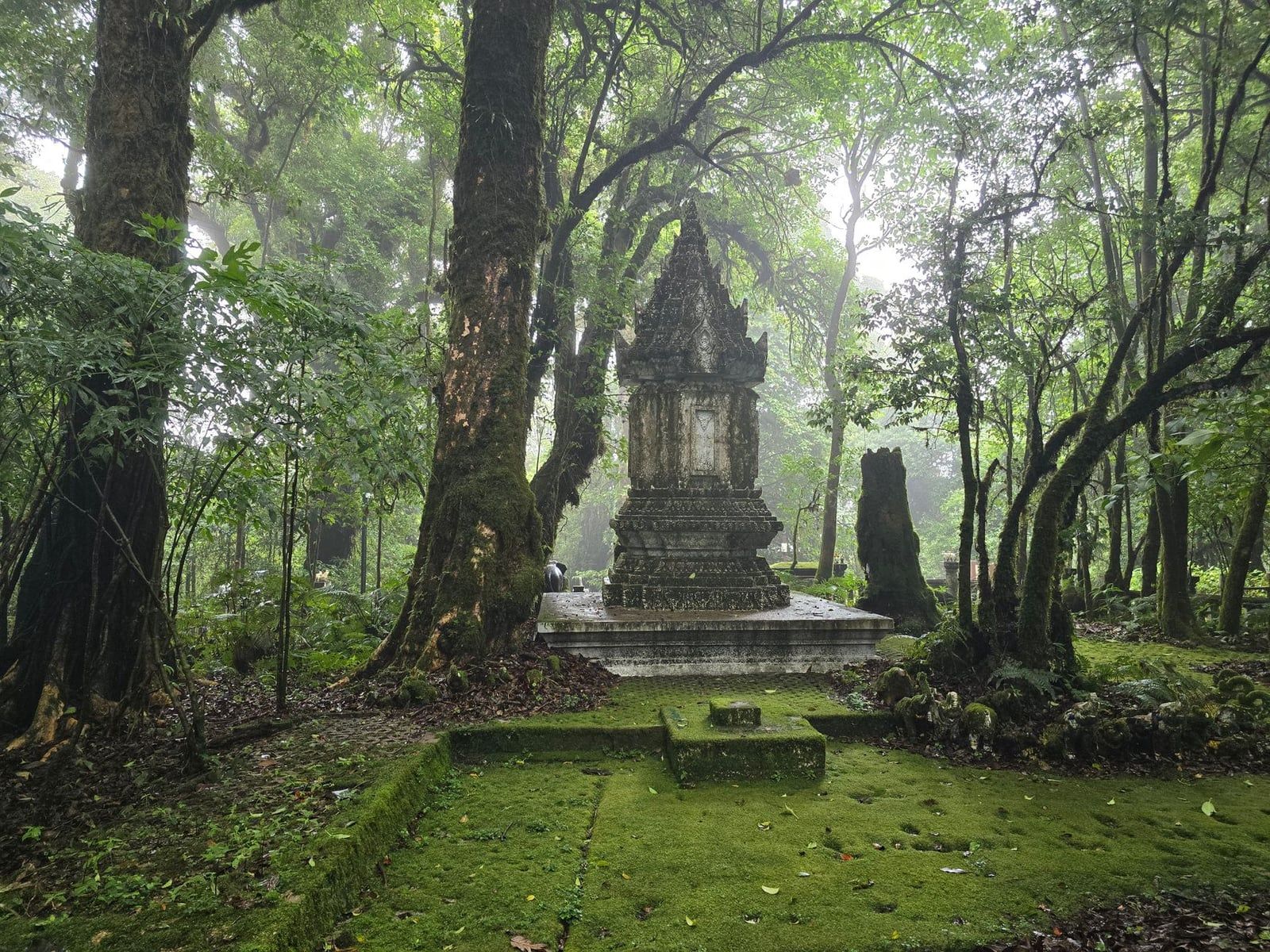
The mountain was originally called Doi Luang, meaning 'great mountain.' It took its current name from King Inthawichayanon, one of the last rulers of Chiang Mai. He advocated for forest conservation in the north. At his request, his remains were interred on the mountain after his death.
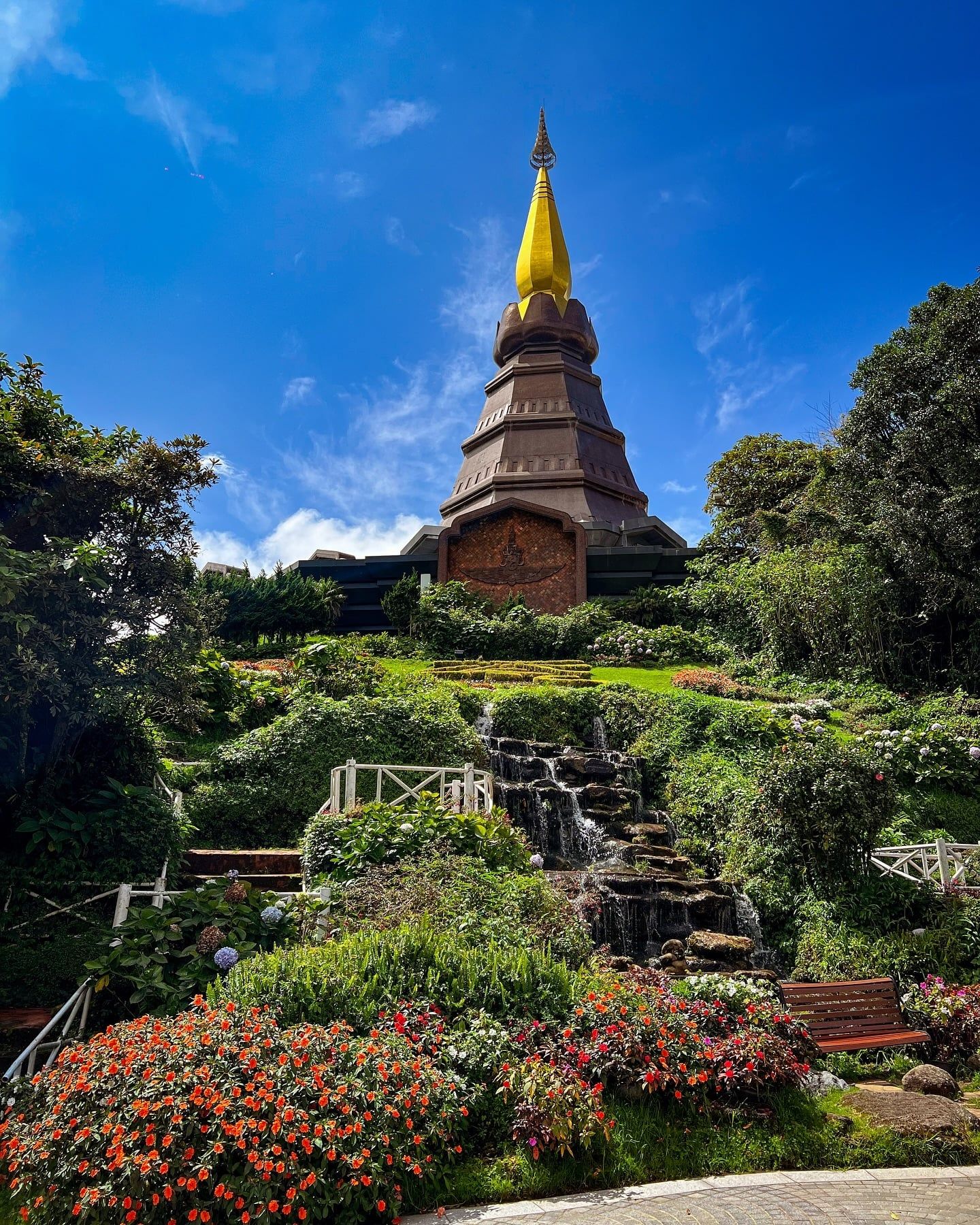
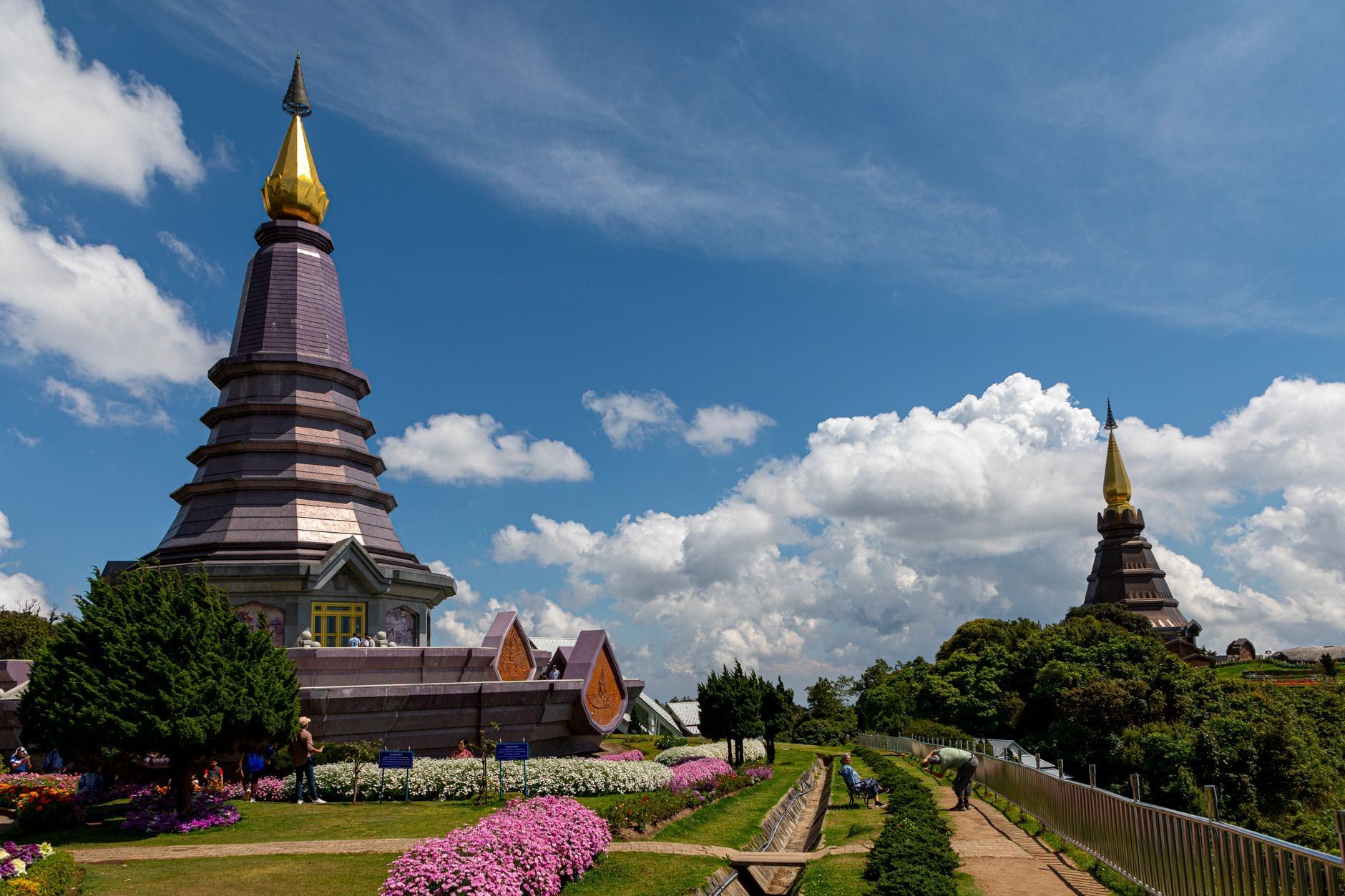
Early conservation efforts began here in 1954. Doi Inthanon officially became Thailand's sixth national park on October 2, 1972, with boundaries updated in 1978 and 2009. Decades later, the Royal Twin Pagodas—Phra Mahathat Naphamethanidon and Naphamethanidon—were constructed near the summit. They commemorate the 60th birthdays of King Bhumibol and Queen Sirikit.
Discover the full history and cultural significance on our About page.
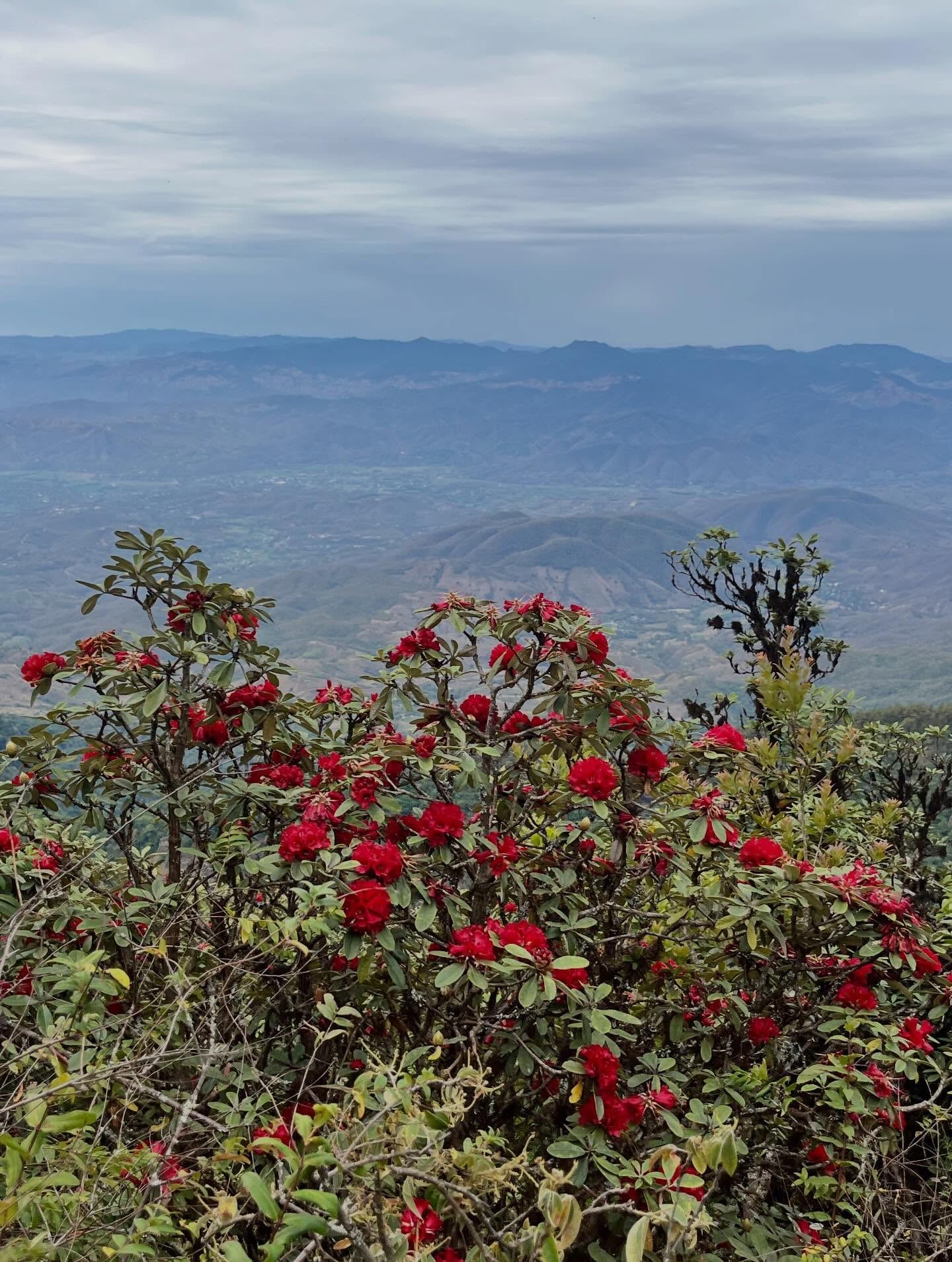
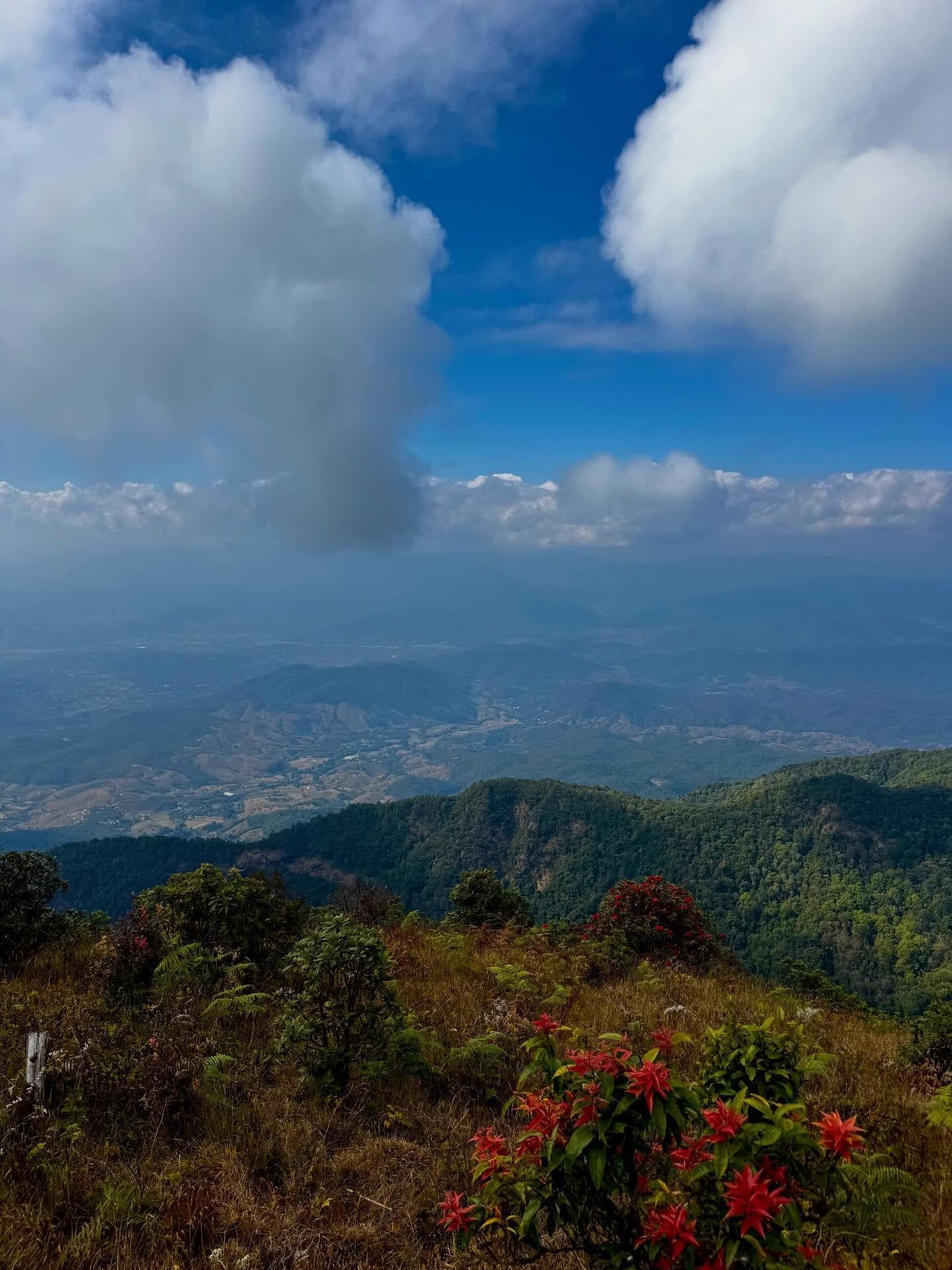
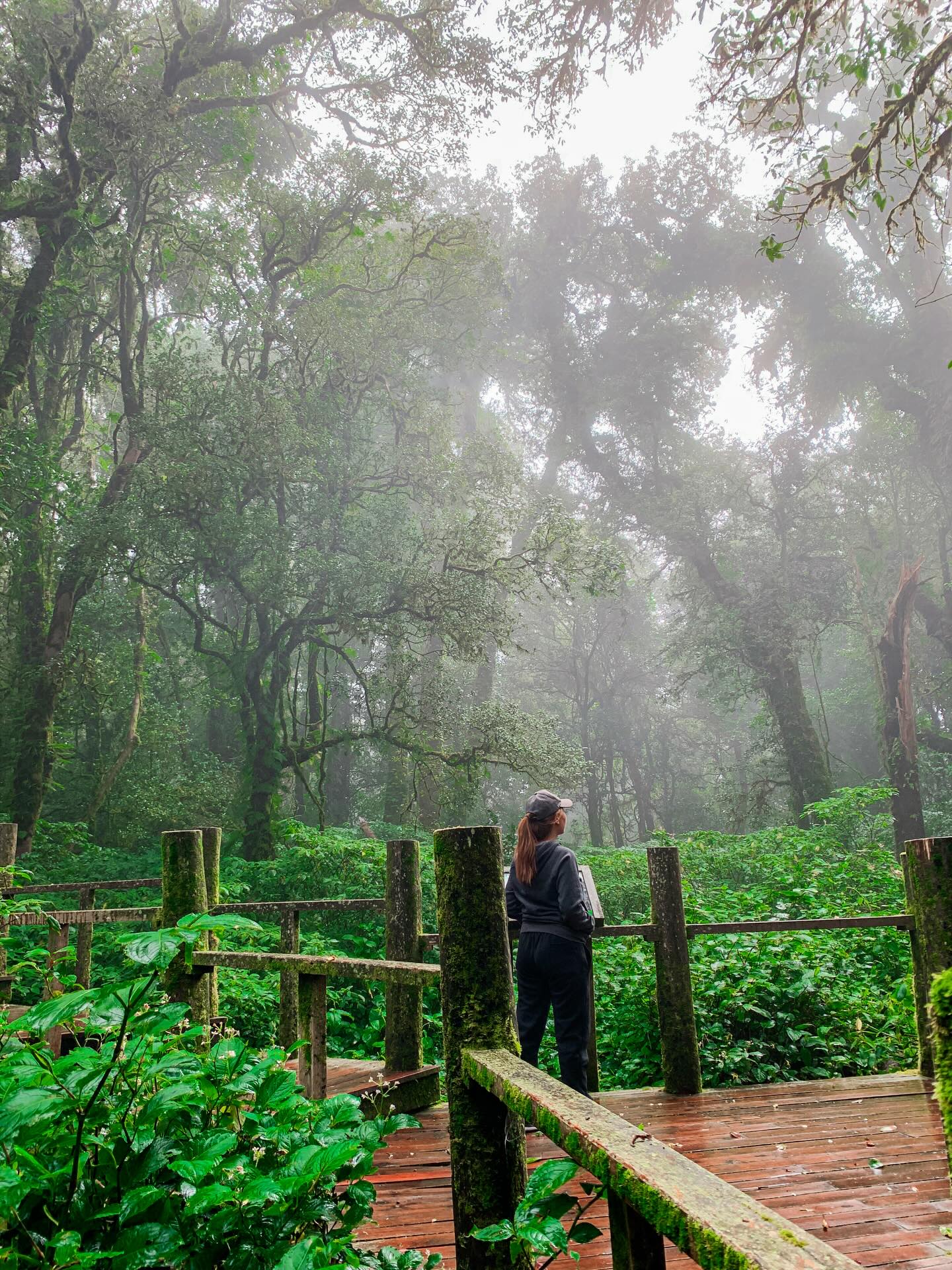
A raised wooden path loops through Thailand's only sphagnum bog near the 2,565-meter summit. The air stays cold here year-round. You walk through dense moist evergreen forest heavy with mosses, ferns, and high-altitude rhododendrons found nowhere else in the country.
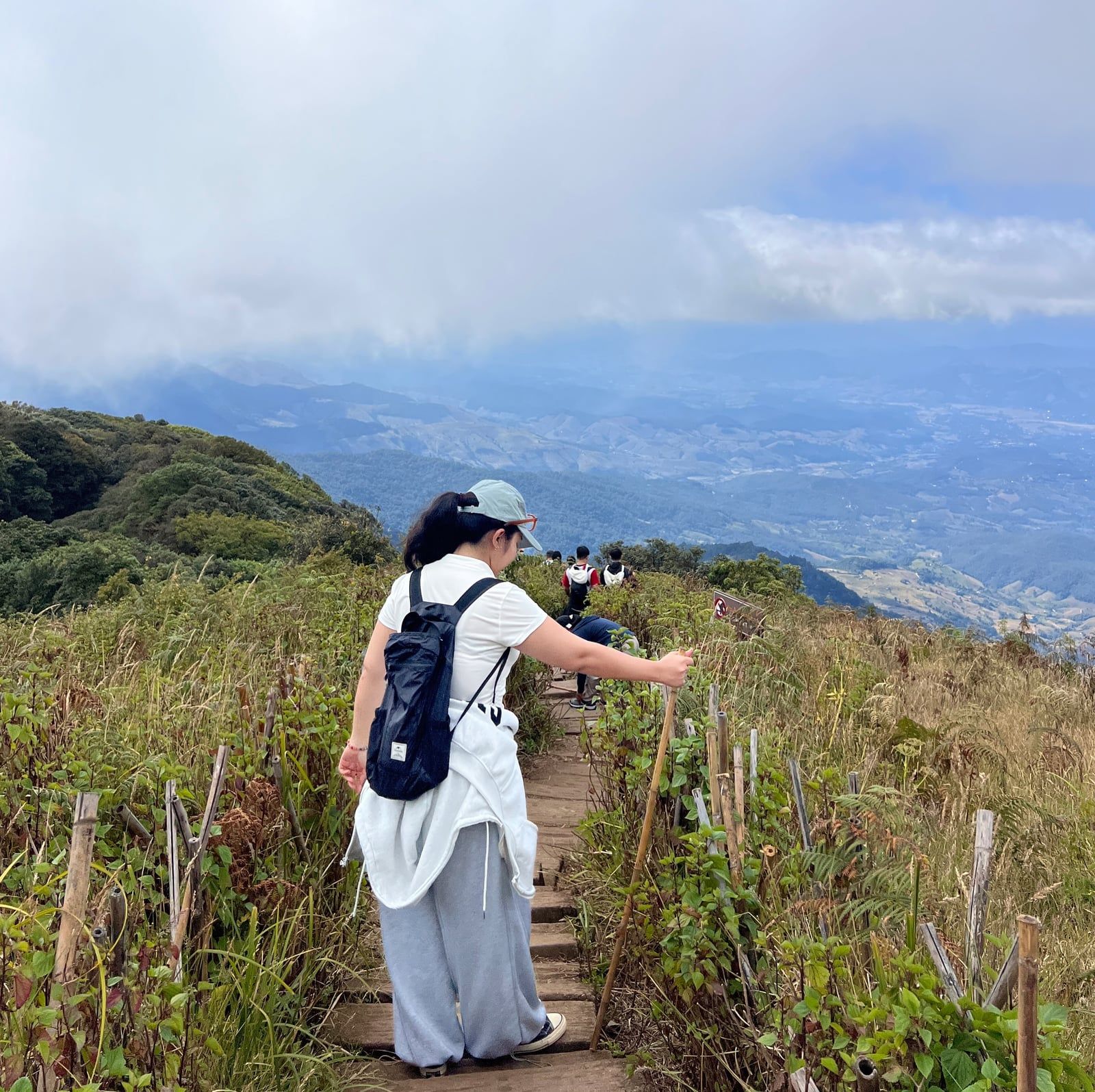
From November to February, a dense fog rolls through the valleys below the pine-dotted ridgeline. The viewpoint near the Kew Mae Pan trailhead offers a clearer sunrise than the misty peak itself. Bring a heavy jacket. Temperatures often drop close to freezing before dawn.
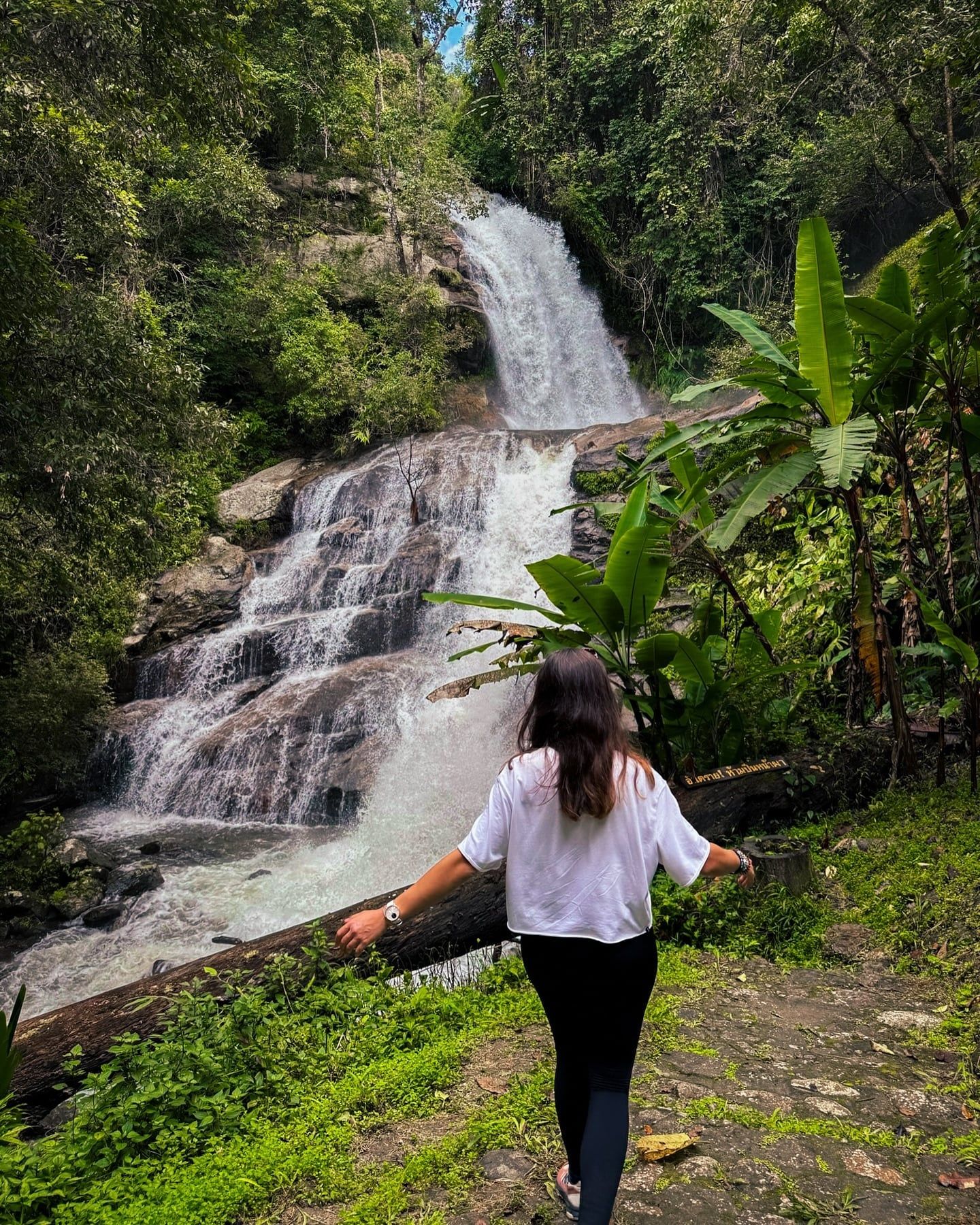
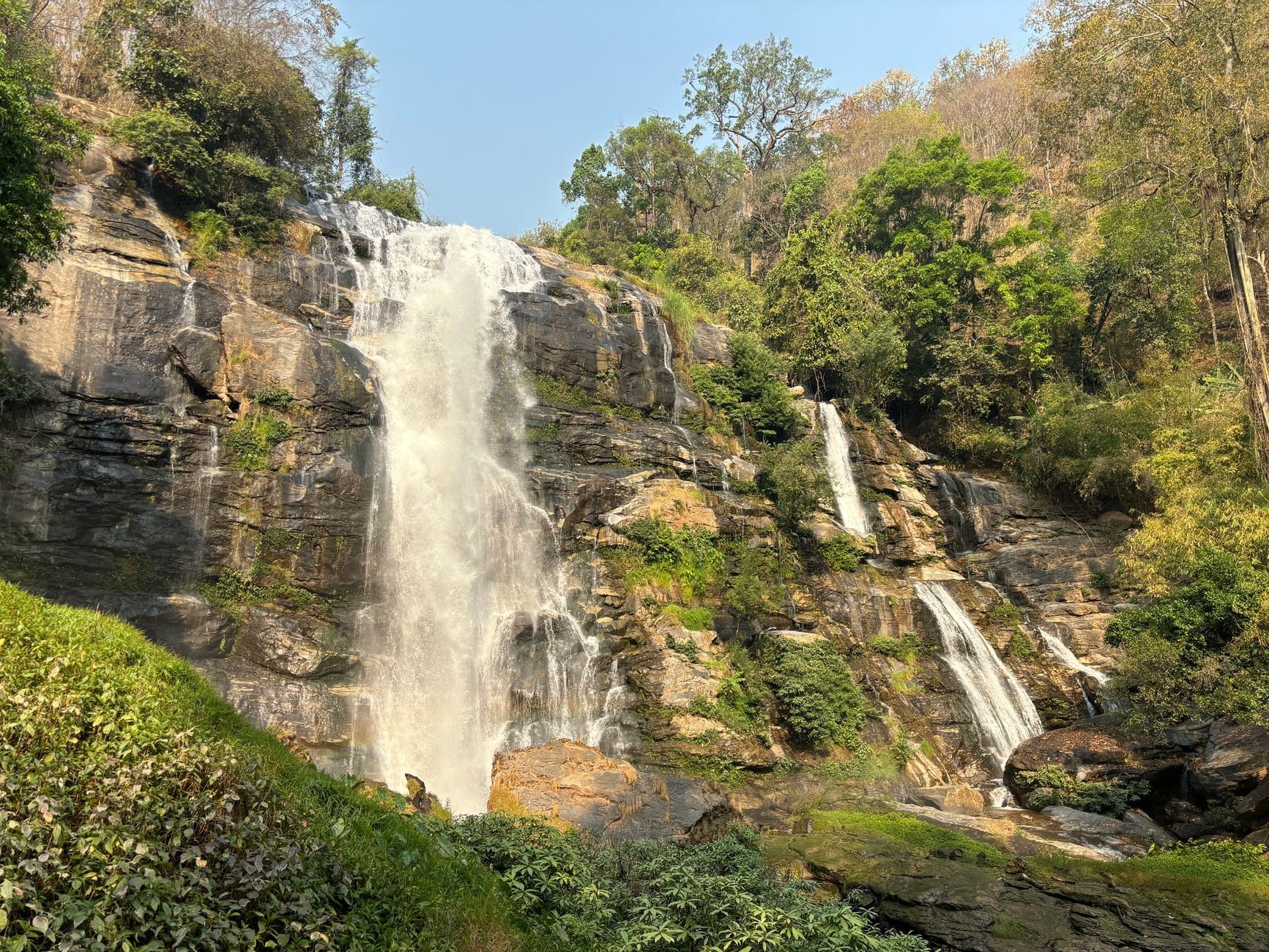
This powerful cascade sits just off the main park road. Water crashes over the rocks with enough force to throw a constant mist and frequent rainbows across the viewing area. You only need a short walk from the parking lot to feel the spray.
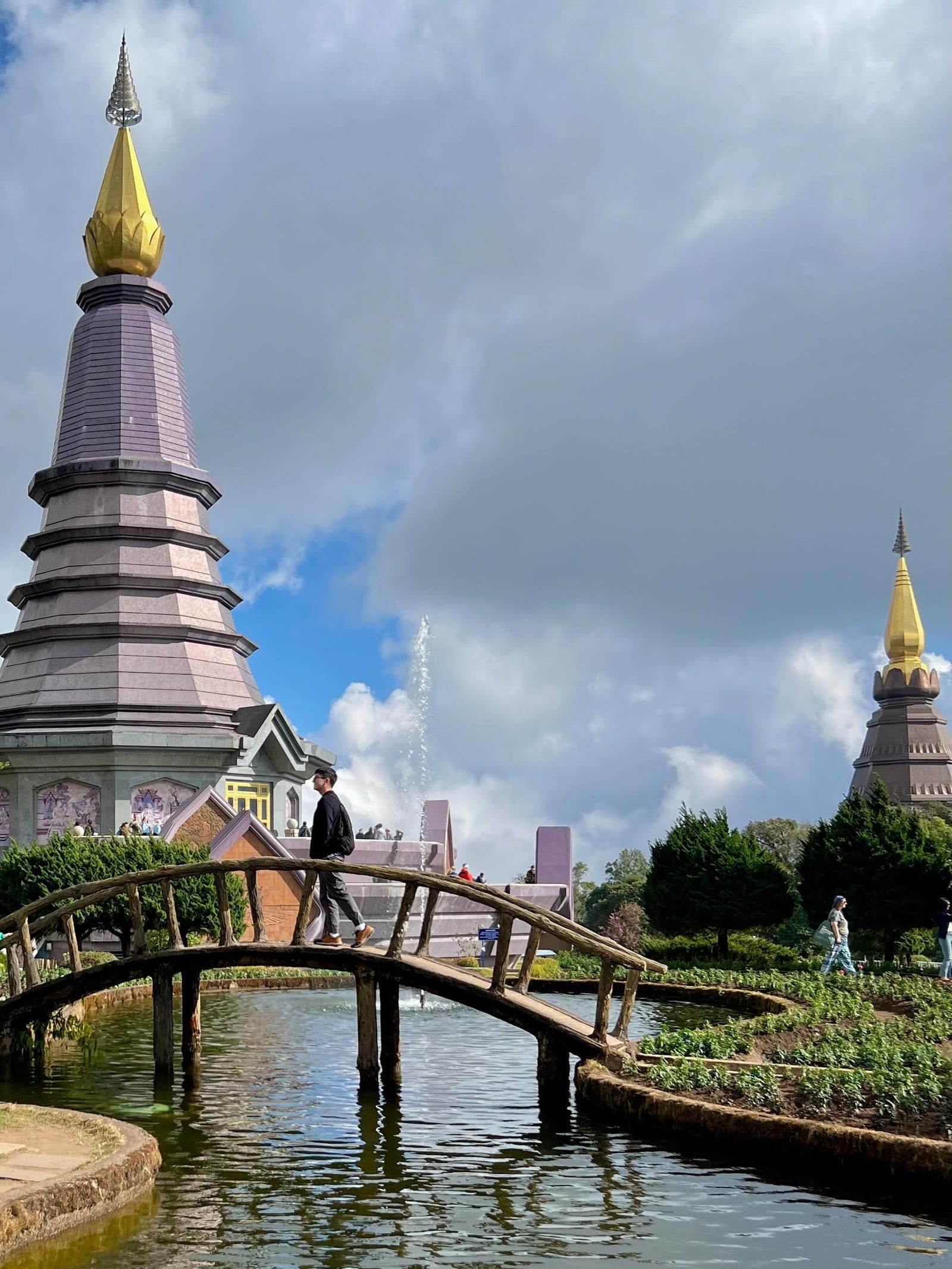
Built for the 60th birthdays of King Bhumibol and Queen Sirikit, these two shrines sit high on the mountain surrounded by manicured terraced gardens. The site costs an extra 100 Baht to enter. Late afternoon visits catch the best light across the panoramic ridges.
Choose a tour starting at $28.86 with air-conditioned Chiang Mai hotel pickups and free cancellation up to 24 hours before departure.
Swipe to see more
 Free Cancellation
 Free Cancellation
 Free Cancellation 9h
 Free Cancellation 10h Free Cancellation Free Cancellation Free Cancellation 9h Free Cancellation 10h Free Cancellation 9h
 Free Cancellation 8h
 Free Cancellation
 Free Cancellation Free Cancellation Free Cancellation 9h
 Free Cancellation
 Free Cancellation 11h
Target November through February for clear skies, morning valley mist, and open hiking trails. Summit temperatures average 10 to 15°C but regularly approach freezing, so pack real winter layers.
Agricultural burning chokes the air with smoke and haze. Vegetation dries out, and waterfalls slow to a trickle before the rains begin in May. Skip this window.
Torrential rains turn paths slippery and shut down the Kew Mae Pan trail entirely. Birding remains decent through July, but you'll be dodging frequent heavy washouts.
September and October deliver the heaviest downpours of the year. By November, the skies clear, temperatures drop, and the main hiking routes reopen for the dry season.
Expect crisp air, morning mist rolling through the valleys, and summit temperatures plunging near or below freezing. Late January brings a brief bloom of pink Siamese sakura.
Main park gates open between 5:00 and 5:30 am and close to new entries around 6:00 to 6:30 pm daily. Overnight guests can still move around after hours. The visitor center operates from 8:00 am to 4:00 pm year-round, while most individual waterfalls and viewpoints wrap up access between 4:00 and 5:00 pm. The Kew Mae Pan Nature Trail shuts down entirely from roughly June through October for rainy season forest recovery.
| Category | Price |
|---|---|
| Foreign Adult | 300 Baht |
| Foreign Child (3-14 years) | 150 Baht |
| Thai Adult | 60 Baht |
| Thai Child | 30 Baht |
| Car Entry | 30 Baht |
| Motorbike Entry | 20 Baht |
| Royal Twin Pagodas (Separate Fee) | 100 Baht |
| Royal Agricultural Station (Separate Fee) | 20 Baht |
| Kew Mae Pan Trail Guide (Mandatory) | 200 Baht per group |
Buy general entry tickets right at the gate. No advance booking is needed for day trips. Bring cash in small denominations. The park lacks ATMs, and ticket booths or food stalls rarely accept cards. The closest reliable cashpoint is in Chom Thong town before you reach the entrance.
For complete schedules and ticket prices, visit our Hours & Fees page.
The park entrance lies 60 to 70 kilometers from Chiang Mai city center. Renting a vehicle or hiring a driver offers the most practical way to cover the distances between the lower gates and the 2,565-meter summit.
📍 Chom Thong District, Chiang Mai Province
Driving yourself or hiring a driver is the most practical way to explore the park. The route follows paved roads that become sharply winding and mountainous as you approach the summit. You need a vehicle to comfortably cover the 90 kilometers from Chiang Mai city to the peak. Rent a car if you know how to handle steep mountain grades. Otherwise, book a local driver.
Operators like AK Travel and Take Me Tour run trips out of Chiang Mai. An air-conditioned van picks you up at your hotel and hits the main stops, including the pagodas, waterfalls, and Kew Mae Pan trail. These packages usually cover an English-speaking guide and lunch. It removes the stress of mountain driving. Just prepare for a long eight to ten-hour round trip.
Riding a motorbike up the mountain is for experienced riders only. The initial highway stretch from Chiang Mai moves fast. Inside the park boundaries, the elevation changes drastically and hairpin turns demand solid braking control. Fog often ruins early morning visibility. Skip this entirely if you lack steep mountain driving experience.
Shared pickup trucks run from Chiang Mai through Chom Thong, proving slow and highly inconvenient. Drivers wait at the station until the back is entirely full. You must make multiple transfers just to reach the park boundaries. Inside, these trucks only pass the lower waterfalls. Reaching the summit requires chartering the whole vehicle.
For detailed transport options and routes, visit our Directions page.
There are no ATMs inside the park. The last reliable cashpoint is in Chom Thong town before the entrance. You need cash for the 200 Baht Kew Mae Pan guide fee, the 100 Baht Royal Twin Pagodas ticket, and local food stalls. Card readers are almost nonexistent here.
Chiang Mai might be sweltering, but the 2,565-meter summit averages 10-15°C year-round. Temperatures drop below freezing between November and February, hitting minus 0.4°C in early 2026. Bring a jacket, hat, and gloves for early mornings. You also need covered shoulders and knees for the Royal Twin Pagodas.
The 3-kilometer Kew Mae Pan ridge trail is only open from November to May. You cannot hike it alone. A local Hmong guide is mandatory and costs 200 Baht per group. Guides are assigned first-come, first-served at the Km 42 trailhead, so get there early to avoid waiting.
Thai national parks ban all single-use plastics, including thin bags, straws, and styrofoam containers. Drones are also strictly prohibited without prior written permission from the Department of National Parks. Breaking either rule carries a fine of up to 100,000 Baht. Pack a reusable water bottle instead.
Visit on a weekday if possible. The winding mountain road gets severely congested during Thai public holidays like Songkran and New Year. On January 1, 2026, over 3,300 vehicles crammed into the park. If you drive yourself, leave Chiang Mai no later than 7 am to beat the rush.
Staying near headquarters lets you catch the summit sunrise without a pre-dawn drive from Chiang Mai. You can rent a park bungalow for 1,000 to 6,500 Baht or camp from October to February. The official online reservation system broke down in 2026. You have to book directly by phone.
Water cascades over wide limestone terraces into natural pools at this tall, multi-tiered waterfall. It sits just outside the main attraction cluster. You'll need to walk a short distance from the parking area.
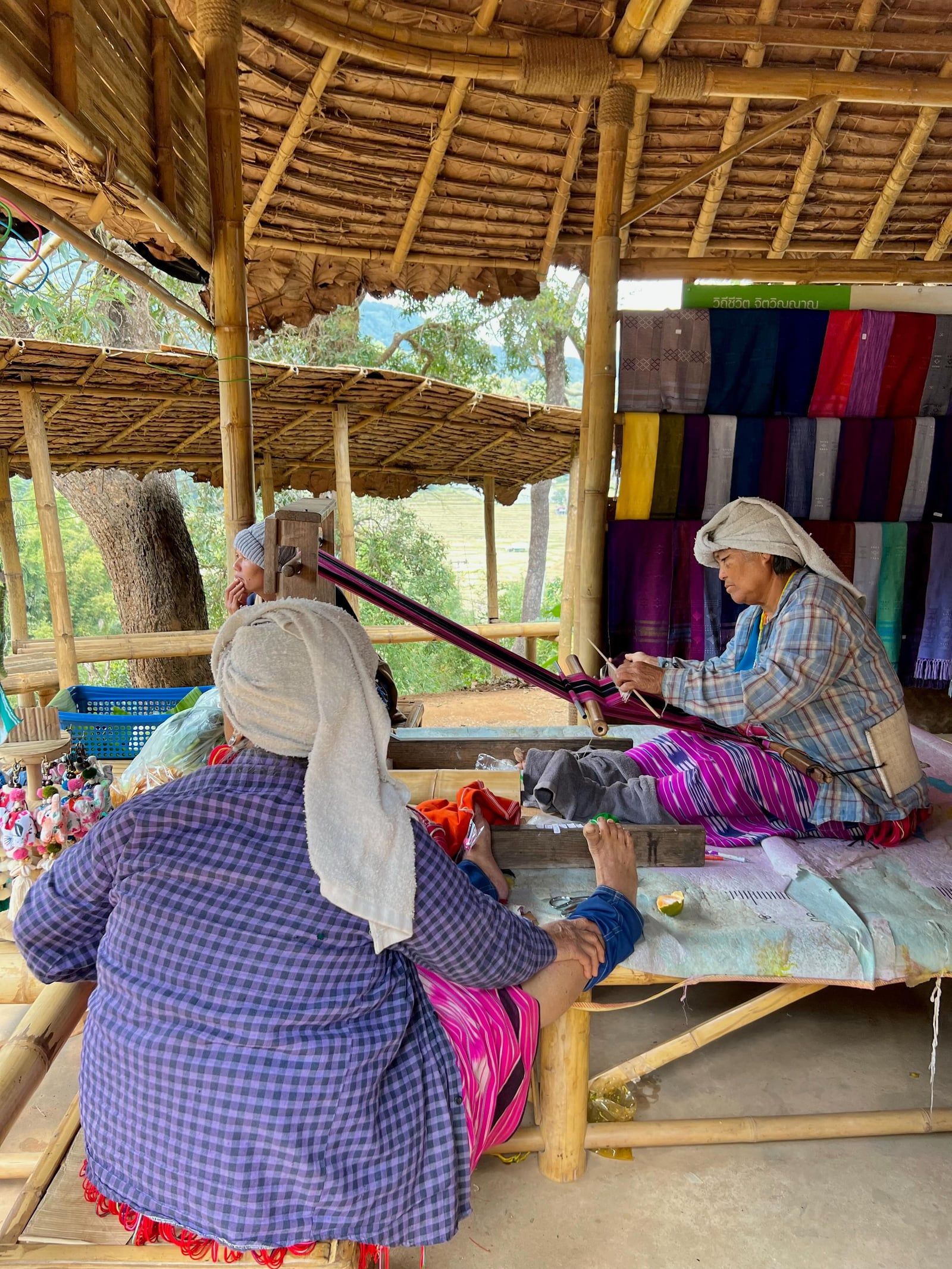
This traditional Karen hill tribe settlement grows organic coffee and farms terraced rice paddies. The fields turn vivid green late in the rainy season. Stop here for a village cafe break or an overnight homestay.
Hit this historic town for cash, food, and supplies before entering the park. Wat Phra That Si Chom Thong anchors the area, housing revered Buddhist relics.
Read what travelers share about their experience visiting Doi Inthanon National Park — from practical tips to personal highlights.
Planning advice, comparisons, and practical tips.
Doi Inthanon tops out at 2,565 meters, the highest point in Thailand, and the area became a national park in 1972. Three nature trails cover the…
Doi Inthanon fits into a single day if you pick two or three highlights and accept you won't see the whole park. The mountain sits roughly 90-100km…
Doi Inthanon National Park has seven named waterfalls, and no two of them behave the same way. Wachirathan roars right off the roadside; Mae Pan…
Foreign adults pay 300 Baht and children aged 3 to 14 pay 150 Baht. Thai nationals pay 60 Baht for adults and 30 Baht for children. You'll also need separate cash for vehicle entry (30 Baht for cars) and the Royal Twin Pagodas (100 Baht).
The main gates open between 5:00 and 5:30 am and close to new entries around 6:00 to 6:30 pm daily. Most individual attractions and trails are accessible from early morning until 4:00 or 5:00 pm. The visitor center runs from 8:00 am to 4:00 pm.
The park entrance is 60 to 70 kilometers from Chiang Mai, taking about 1.5 to 2 hours by car. Renting a car or hiring a private driver for around 3,200 Baht offers the most flexibility. Public songthaews run from Chom Thong but require multiple transfers and take at least 2.5 hours.
Temperatures at the 2,565-meter peak average 10 to 15°C year-round and regularly drop near freezing between November and February. Frost is common in the early morning during the cool season. Bring a jacket and long pants even if Chiang Mai is sweltering.
Most natural trails and waterfalls feature uneven terrain and stairs, making full independent wheelchair access unrealistic. You can drive directly to the summit viewpoint and the terraced gardens of the Royal Twin Pagodas. Roadside stops like Mae Klang Waterfall require only short, level walks from the parking lot.
General park entry tickets are sold at the gate on arrival. You do not need an advance permit, but hiking the Kew Mae Pan Nature Trail requires a mandatory local guide. You hire them directly at the trailhead for 200 Baht per group.
No, the park closes Kew Mae Pan from around June or July until November for forest recovery during the rainy season. When it reopens for the dry season, the 3-kilometer loop takes about 2 to 3 hours to hike.
There are no ATMs inside Doi Inthanon, and card payments are rarely accepted at ticket booths or food stalls. Withdraw all the cash you need in Chiang Mai or the nearby town of Chom Thong before entering the park.
Browse verified tours with free cancellation and instant confirmation.
Find Tours

