Doi Inthanon fits into a single day if you pick two or three highlights and accept you won't see the whole park. The mountain sits roughly 90-100km southwest of Chiang Mai's Old City, a 1.5-2 hour drive each way, and most day-trippers are back in the city by early evening after about eight hours on the road and on the trails.
This guide sequences what actually works in one day: which waterfall and which trail to pair, what the park costs beyond the entrance ticket, and an hour-by-hour schedule that accounts for the drive time between sites that most checklists ignore.
Is a Doi Inthanon Day Trip Worth It?
Yes, for almost anyone based in Chiang Mai. Doi Inthanon is Thailand's highest peak, and reaching its 2,565m summit, a waterfall, and a cloud-forest trail without booking a second night is a rare combination in this part of Southeast Asia. The catch: the park covers about 482 square kilometres, so one day gets you the highlights, not the whole place.
- Location: Chom Thong District, Chiang Mai Province, about 90-100km from the Old City
- Summit elevation: 2,565m, Thailand's highest point, nicknamed the Roof of Thailand
- Park size: roughly 482 sq km, designated a national park in 1972
- Drive time: 1.5-2 hours each way from Chiang Mai
Seeing everything inside the park — every waterfall, every trail, the Royal Agricultural Station, the hill-tribe villages — takes two to three days, not one. Day-trippers should pick one trail and one or two waterfalls and let the rest go; our park overview covers the full layout if you want the bigger picture before deciding what to skip. Serious hikers who want Kew Mae Pan, Pha Dok Siew and a full waterfall circuit in one visit are better off spreading the park across two days instead of racing the clock.
Doi Suthep, the temple mountain 15km from the city, is a half-day trip built around a single golden chedi. Doi Inthanon is a full-day trip built around cool-climate hiking and cascades. Pick Suthep for a quick culture stop, Inthanon for a real day out in the mountains.
Getting There: Tour, Self-Drive, or Public Transport?
Self-driving gives the most flexibility and is the cheapest option for two or more people. From Chiang Mai, take Route 108 south towards Chom Thong for 57km, then turn onto Route 1009 (the Chom Thong-Doi Inthanon road) for another 31km to the park gate. Car rental in the city runs 700-1,500 baht a day; a motorbike is cheaper but cold on the upper switchbacks. Check the driving directions before you go — signage thins out past Chom Thong.
Group tours from Chiang Mai cost 1,450-2,500 baht per person and bundle transport, park entrance, a guide and lunch into one price. It's the easiest option if you'd rather not navigate mountain roads yourself. Day tours departing Chiang Mai generally follow the same route as self-drivers but skip the parking and fee-queue hassle.
A private driver or private tour runs 2,000-3,500 baht round trip for the vehicle, split however many people you're travelling with, and lets you set your own stops and pace. Private tours are worth the premium for families or anyone who wants to linger at one waterfall and skip another entirely.
Public songthaew travel is possible but slow. A yellow songthaew from Chiang Mai's Chang Phuak terminal to Chom Thong costs about 30 baht and takes two to three hours, then you'll need to charter a second songthaew into the park for 1,500-2,000 baht. By the time both connections are made, half the daylight is gone — workable on a multi-day trip, a poor fit for a single tight day.
| Option | One-way travel time | Cost per person | Flexibility |
|---|---|---|---|
| Self-drive (car/motorbike) | 1.5-2 hours | Rental 700-1,500 baht/day, shared | Highest — set your own stops |
| Group tour | 1.5-2 hours | 1,450-2,500 baht, all-in | Fixed schedule, no driving |
| Private tour/driver | 1.5-2 hours | 2,000-3,500 baht total (shared) | High — custom stops and pace |
| Public songthaew | 2-3 hours plus charter | 30 baht + 1,500-2,000 baht charter | Low — slow, multiple transfers |
Entrance Fees & Total Day-Trip Budget
Foreign adults pay 300 baht at the park gate, foreign children aged 3-14 pay 150 baht; Thai nationals pay 60 baht and 30 baht respectively. Add a vehicle fee: 30 baht for a car, 20 baht for a motorbike. Check the current opening hours and entry fees before you set out, since pricing has changed before and rangers rarely have change for large notes.
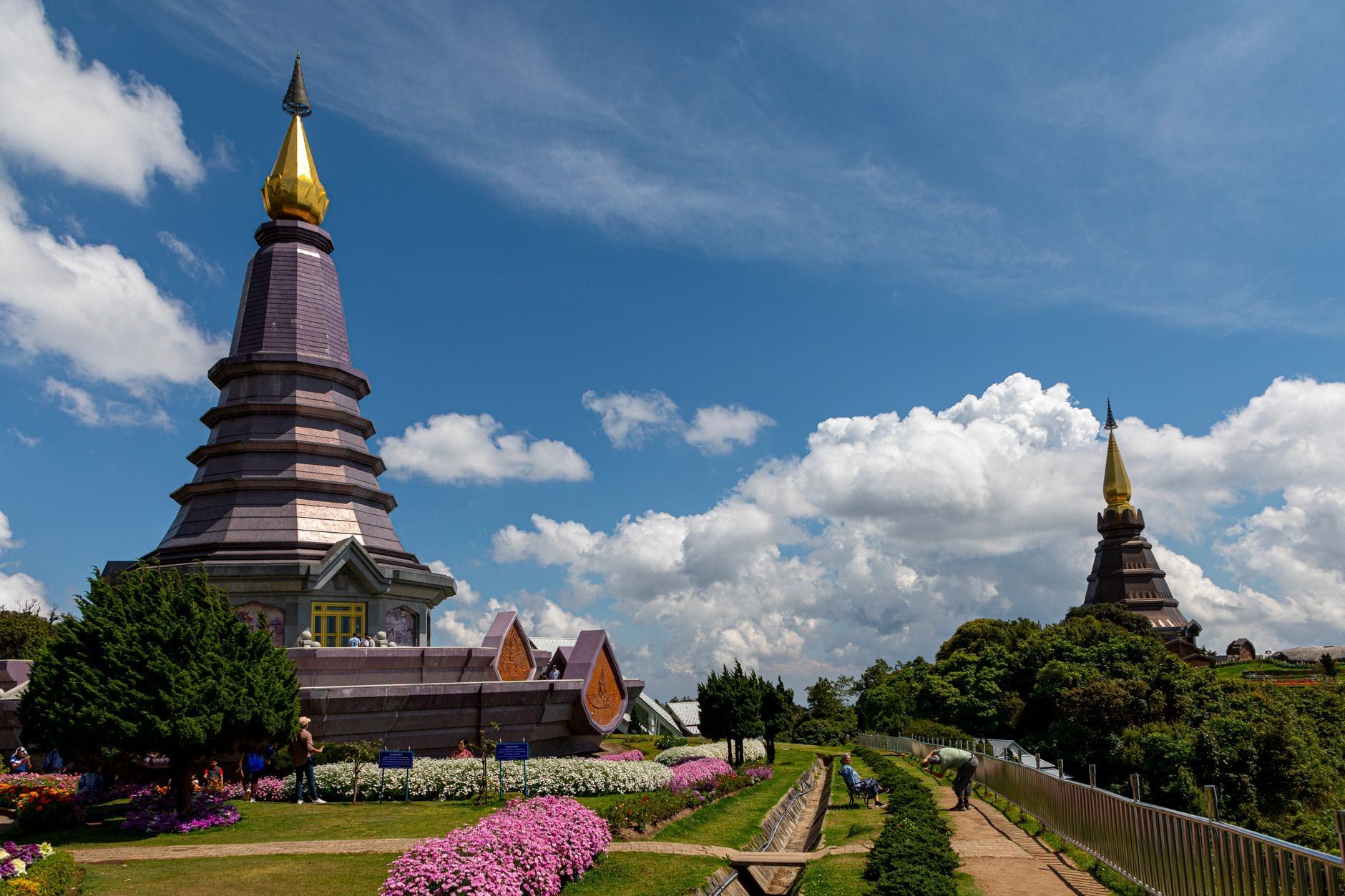
The Royal Twin Pagodas charge their own 100-baht ticket, separate from the park entrance — easy to forget and a common surprise at the gate. Hiking Kew Mae Pan or Pha Dok Siew also requires a local guide at 200 baht per group, not per person, so a group of four brings the per-head cost down to 50 baht. Ang Ka Nature Trail is the one hike you can walk without a guide and without a fee.
Gates open around 5:30am and close at 6pm daily, which is what makes a sunrise summit run possible. Arrive right at opening and you'll beat both the crowds and the fog that often rolls in by mid-morning.
A self-driving couple sharing a rental car, visiting the pagodas and hiking Pha Dok Siew, lands around 1,000-1,100 baht total for two people: entrance, car fee, pagoda tickets, and a shared guide fee, before food and rental. A group tour at roughly 2,000 baht per person already includes entrance, guide and lunch, so the totals land close either way once you count petrol, parking and time.
Best Time to Visit for a Day Trip
November through February is peak season and the best window for a day trip. Skies are clear, summit highs stay in the teens Celsius, and Kew Mae Pan is open. It's also the busiest stretch, so an early gate arrival matters more than usual.
February through April is burning season across northern Thailand, when agricultural fires blanket the region in smoke. Views from the summit and the sea-of-clouds viewpoints can drop close to zero, and hiking gets uncomfortable on the lungs. Avoid this window if photos and visibility matter to your trip.
May through October brings the rains, and with them the waterfalls run at their fullest — Wachirathan and Mae Ya are worth chasing specifically for their volume in this window. The trade-off: Kew Mae Pan closes for the whole period to let the ecosystem recover, so wet-season day-trippers should build the day around Pha Dok Siew or Ang Ka instead.
A short bonus window opens mid-January to mid-February, when wild Himalayan cherry trees bloom for two to three weeks near the Royal Agricultural Station and Khun Wang. It's a good reason to aim a winter trip for the back half of January if the schedule allows.
Chasing the sea-of-clouds view at the KM41 viewpoint or the summit means leaving Chiang Mai around 4-5am to catch the gates at opening. Sunrise tours handle the pre-dawn driving for travelers who'd rather not navigate mountain switchbacks in the dark.
The Realistic One-Day Itinerary
A full day trip runs about eight hours door-to-door once driving, entrance formalities and stops are counted. Here's a sequence that avoids backtracking across the park's north-south road.
- 6:00am — Depart Chiang Mai via Route 108, reach the park gate around 7:30am
- 8:15am — Royal Twin Pagodas and garden viewpoints, about 45 minutes
- 9:15am — Summit boardwalk and Ang Ka Nature Trail, 30-40 minutes
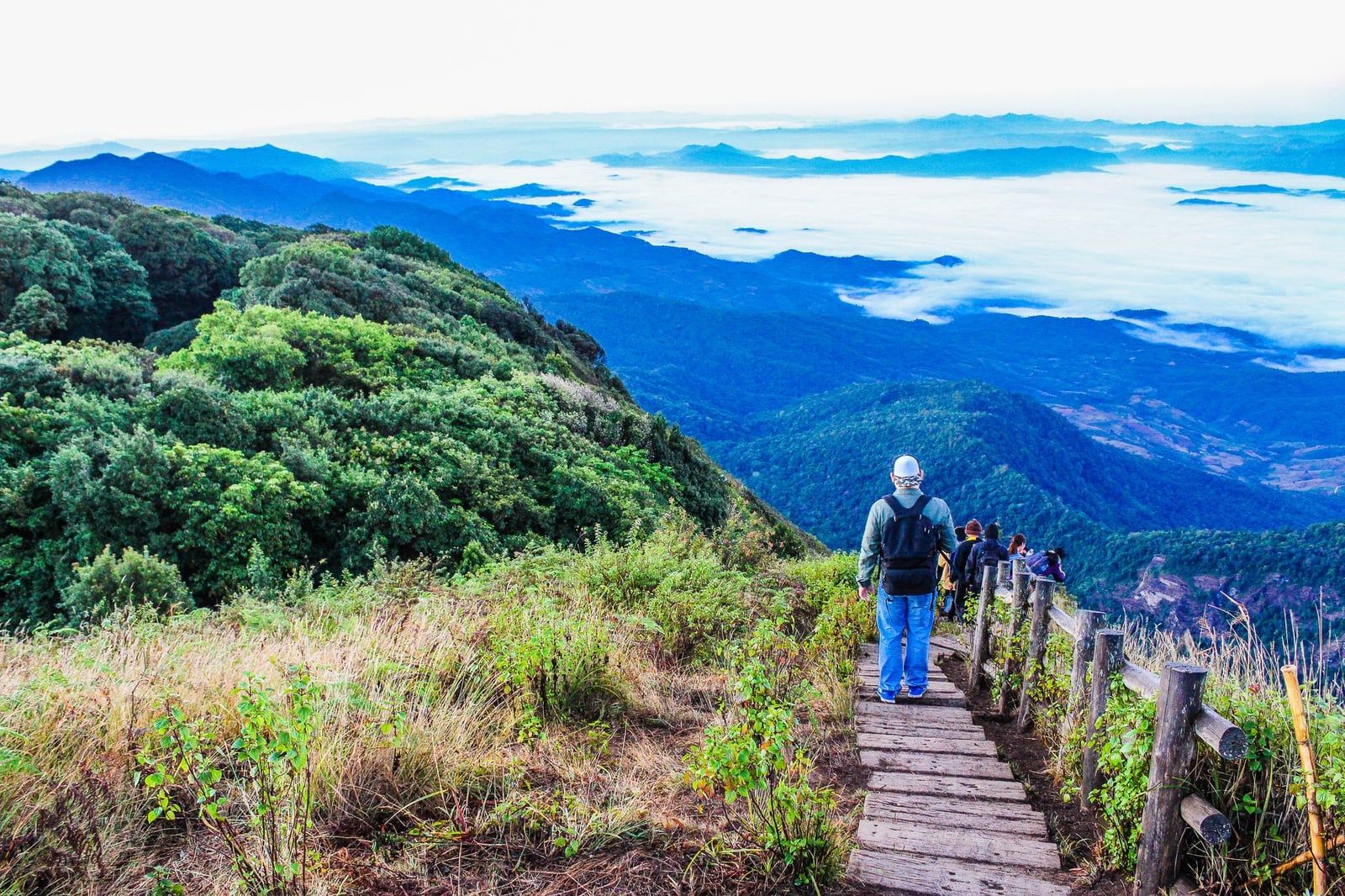
- 10:15am — Kew Mae Pan with a guide (2-3 hours), or swap for Pha Dok Siew
- 1:00pm — Lunch and coffee near Mae Klang Luang village
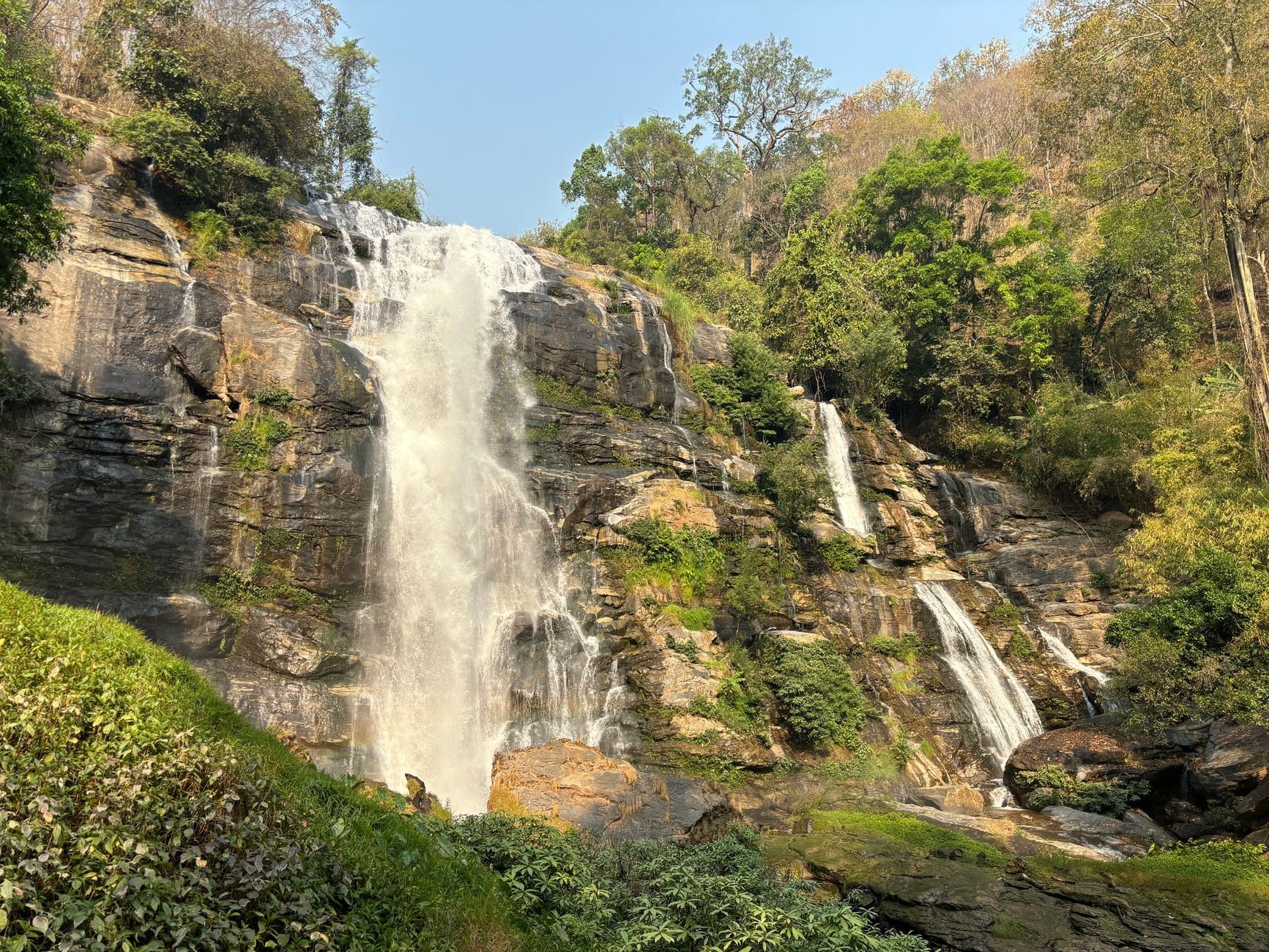
- 2:30pm — Wachirathan Waterfall on the way back down
- 3:30pm — Leave the park, arrive back in Chiang Mai by 5:30-6pm
Build in a 30-minute buffer between the summit area and the Kew Mae Pan trailhead — queues for a guide can run long on weekend mornings. Running behind by early afternoon? Drop Wachirathan before cutting the stop at Mae Klang Luang. The waterfall is dramatic but replaceable; the village stop is the one part of the day that isn't just scenery.
Travelers short on time or fitness should swap Kew Mae Pan for the flatter Pha Dok Siew, which folds hiking and the Karen village into one 3-4 hour block instead of two separate stops.
Choosing Your Waterfalls & Trails: A Decision Table
No day trip covers every waterfall and every trail in the park. Pick one trail and one, maybe two, waterfalls that match your fitness and interests, then commit.
| Trail / Waterfall | Time needed | Difficulty | Guide required | Best for |
|---|---|---|---|---|
| Kew Mae Pan | 2-3 hours (3-4km loop) | Moderate | Yes, 200 baht/group | Panoramic views, sunrise, closed Jun-Oct |
| Pha Dok Siew | 3-5 hours incl. village | Moderate | Yes, 200 baht/group | Hikers who also want village time |
| Ang Ka Nature Trail | 20-30 minutes | Easy | No | Families, short-on-time visitors |
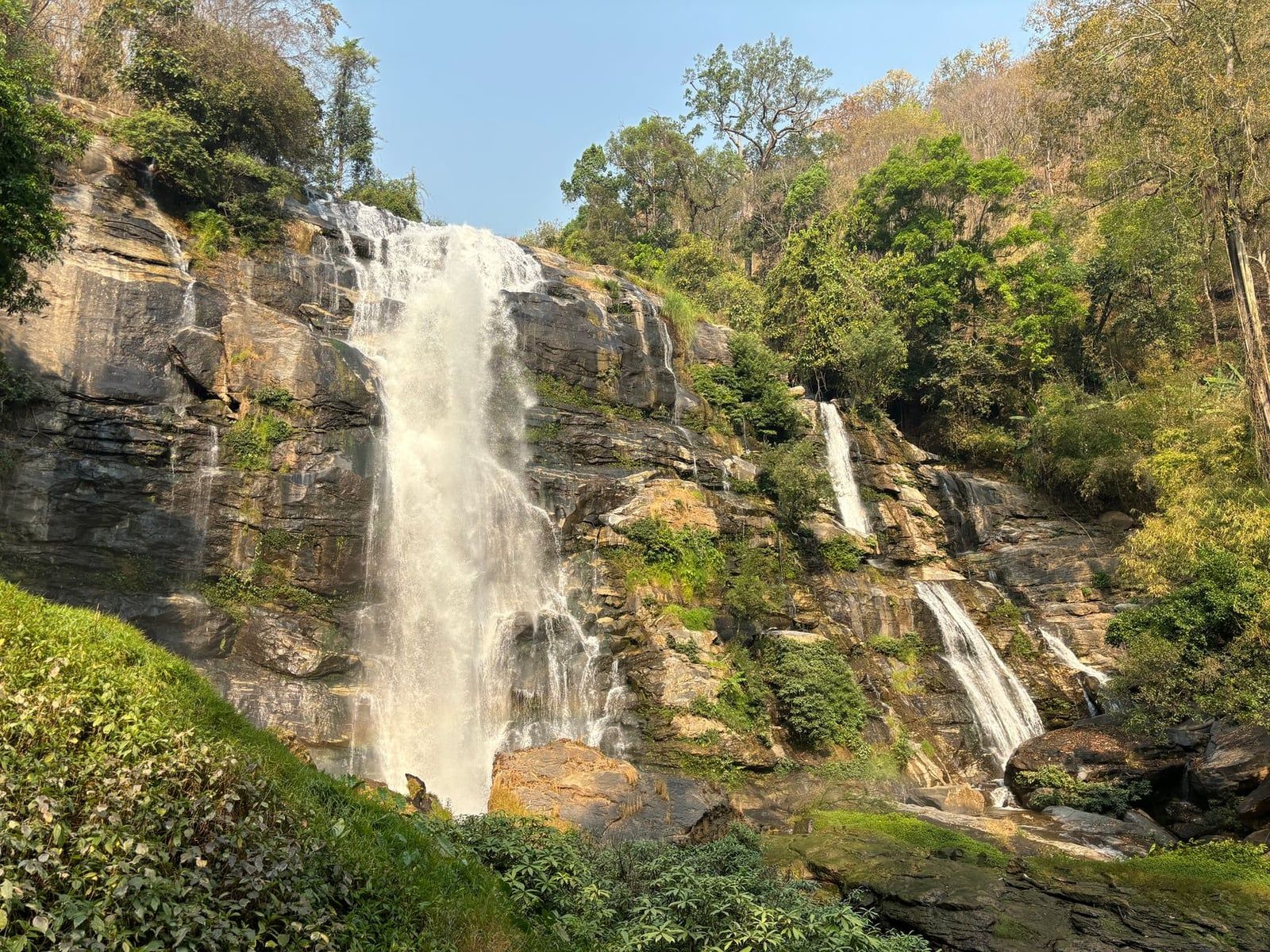
| Wachirathan Waterfall | 15-20 min from car park | Easy | No | Easiest big waterfall, busiest stop |
| Mae Ya Waterfall | 10-15 min walk | Easy | No | Tallest waterfall, outside main loop |
| Sirithan Waterfall | 10 min from road | Easy | No | Quick photo stop near park entrance |
Families with young kids: Ang Ka plus Wachirathan, under an hour of walking combined. Hikers after the signature view: Kew Mae Pan at sunrise, paired with a quick stop at the pagodas on the way down. Waterfall-chasers: Mae Ya in wet season, when its 260-280m drop runs loudest, though it sits outside the main park loop and eats into driving time. For the full rundown on every cascade, see the guide to all seven waterfalls, and hikers weighing trail options can check the complete trail guide before deciding which one to book a guide for.
Culture, Coffee & Practical Tips
Mae Klang Luang is a Karen hill-tribe village built into rice terraces below the summit road, and its Royal Project coffee shops are where most day trips stop for lunch. The Royal Project shifted local Karen and Hmong farmers away from opium cultivation decades ago into coffee, fruit and vegetable growing, with the royal family guaranteeing purchase at fair prices — the terraced coffee farms along the Pha Dok Siew trail are a direct result.
Some operators combine the park with an elephant sanctuary visit earlier or later in the day, trading an hour of park time for it. Combined elephant sanctuary tours handle the logistics of stitching both sites into one day. The Royal Agricultural Station, near the cherry blossom groves, is worth adding in January but a low priority the rest of the year.
- Warm layer or rain jacket: summit temperatures can near freezing in winter
- Real shoes: boardwalks and trailheads get slippery, sandals aren't enough
- Cash: no ATMs inside the park, the nearest is in Chom Thong
- Swimwear: worth packing if Mae Ya Waterfall is on the plan
Flying a drone requires a permit from Thailand's NBTC, and drones are banned outright near the summit and Ang Ka trail because of military installations there. At the Royal Twin Pagodas, cover shoulders and knees — sarongs aren't handed out at the gate the way they are at some temples, so dress before you arrive.
Frequently asked questions
How many days do you need for Doi Inthanon?
A single day covers the highlights — the summit, one waterfall, one trail, the pagodas. Seeing every waterfall and trail in the park realistically takes two to three days.
Is Doi Inthanon worth visiting on a day trip from Chiang Mai?
Yes. It's about 90-100km and a 1.5-2 hour drive from Chiang Mai, which makes the main highlights doable in one long day of roughly eight hours door-to-door.
Do I need a guide to hike in Doi Inthanon?
Yes for Kew Mae Pan and Pha Dok Siew, at 200 baht per group hired at the trailhead. Ang Ka Nature Trail is the only trail you can walk without a guide.
How much does a Doi Inthanon day trip cost?
Park entrance is 300 baht for a foreign adult plus 30 baht for a car; add 100 baht for the Twin Pagodas and 200 baht per group for a trail guide. Group tours run about 1,450-2,500 baht per person all-inclusive; self-drive is typically cheaper for two or more people.
What's the best time of year for a Doi Inthanon day trip?
November through February is best for clear, cool weather. Avoid February-April burning season for hazy views, and note Kew Mae Pan trail closes June through October.
Can I visit Doi Inthanon without a tour?
Yes — self-drive via Route 108 then Route 1009, or rent a car or motorbike in Chiang Mai. Public songthaew works too but takes two to three hours one-way plus a charter fee, which makes it impractical for a single tight day.
What should I pack for a Doi Inthanon day trip?
A warm layer or rain jacket, since summit temperatures can approach freezing in winter despite lowland heat, plus real hiking shoes, cash (there are no ATMs inside the park), and swimwear if Mae Ya Waterfall is on the itinerary.
What's the difference between Doi Inthanon and Doi Suthep?
Doi Suthep is much closer to Chiang Mai city and centers on the Wat Phra That Doi Suthep temple with city views. Doi Inthanon is Thailand's highest peak, further from the city, and built around waterfalls, hiking trails and the Royal Twin Pagodas.